My Chook

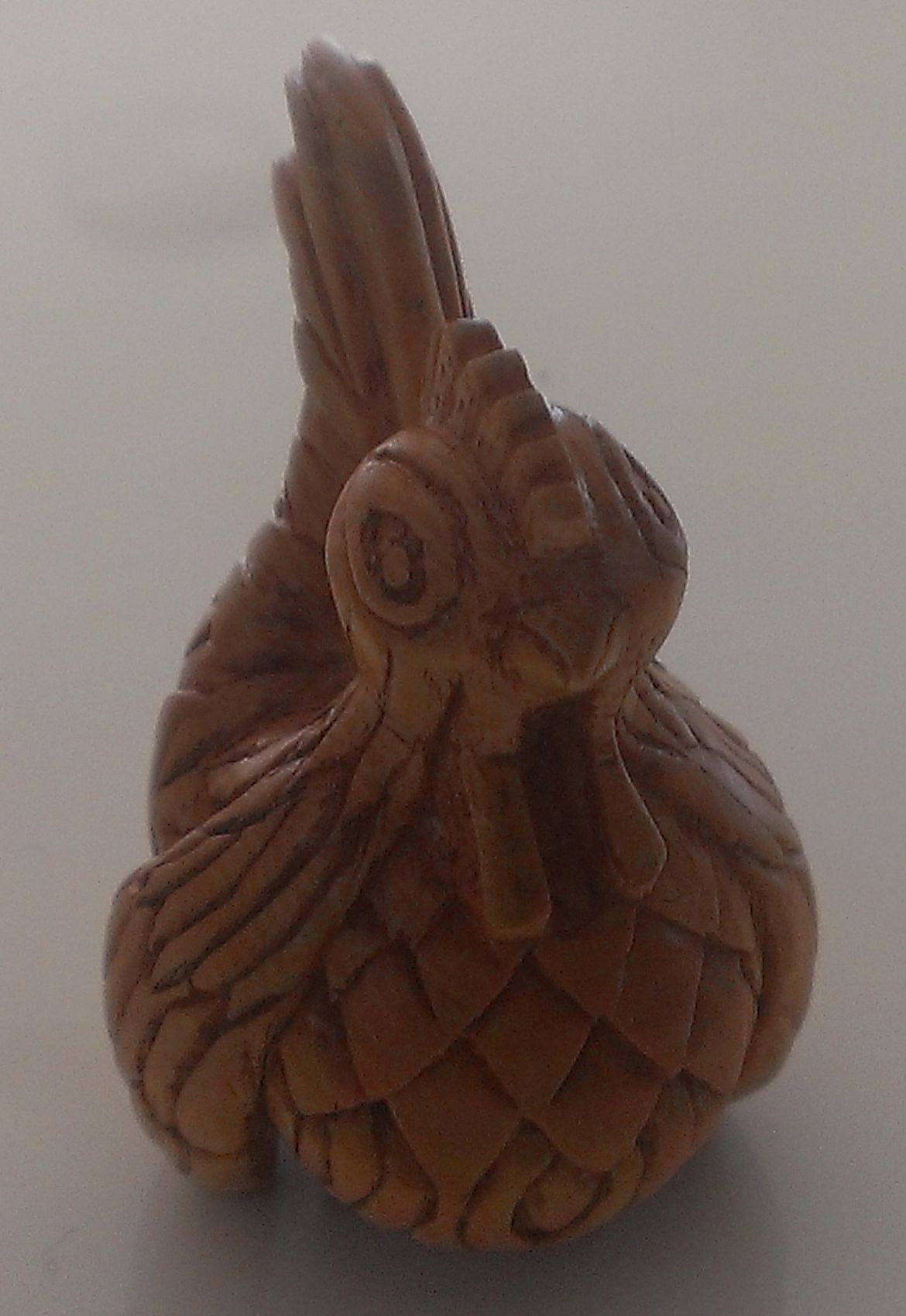
Well, we call them chooks here in Aus, although he is meant to be a rooster but ended up looking more like a homely hen. I drew up the pattern from various pictures of chickens found on the internet and fashioned him firstly from plasticene so I could visualise him from all angles. The carving is done from huon pine, and this piece was particulary hard and close grained,although often huon can be like butter to carve but you have to be careful as it is easy to catch the grain in the wrong direction where a chunk will lift or leave a very rough patch underneath. It will finish beautifully with a good sanding.

I spent a lot of time creating the feathered look and making sure the finish was clean. Because huon is a pale, yellowy wood I decided a bit of colour was necessary so I used tan shoe polish. Because shoe polish is wax based it gives a good finish whilst adding colour, with the cuts absorbing more polish and giving it highlights. It ended up with an extra coating as I inadvertently left it in my jeans pocket and it was well washed and a little paler after the experience, but it survived and was restored to its former glory. It measures about 25mm x 40mm (1″x1.5″)
chicken 37 chicken 33

The Fish

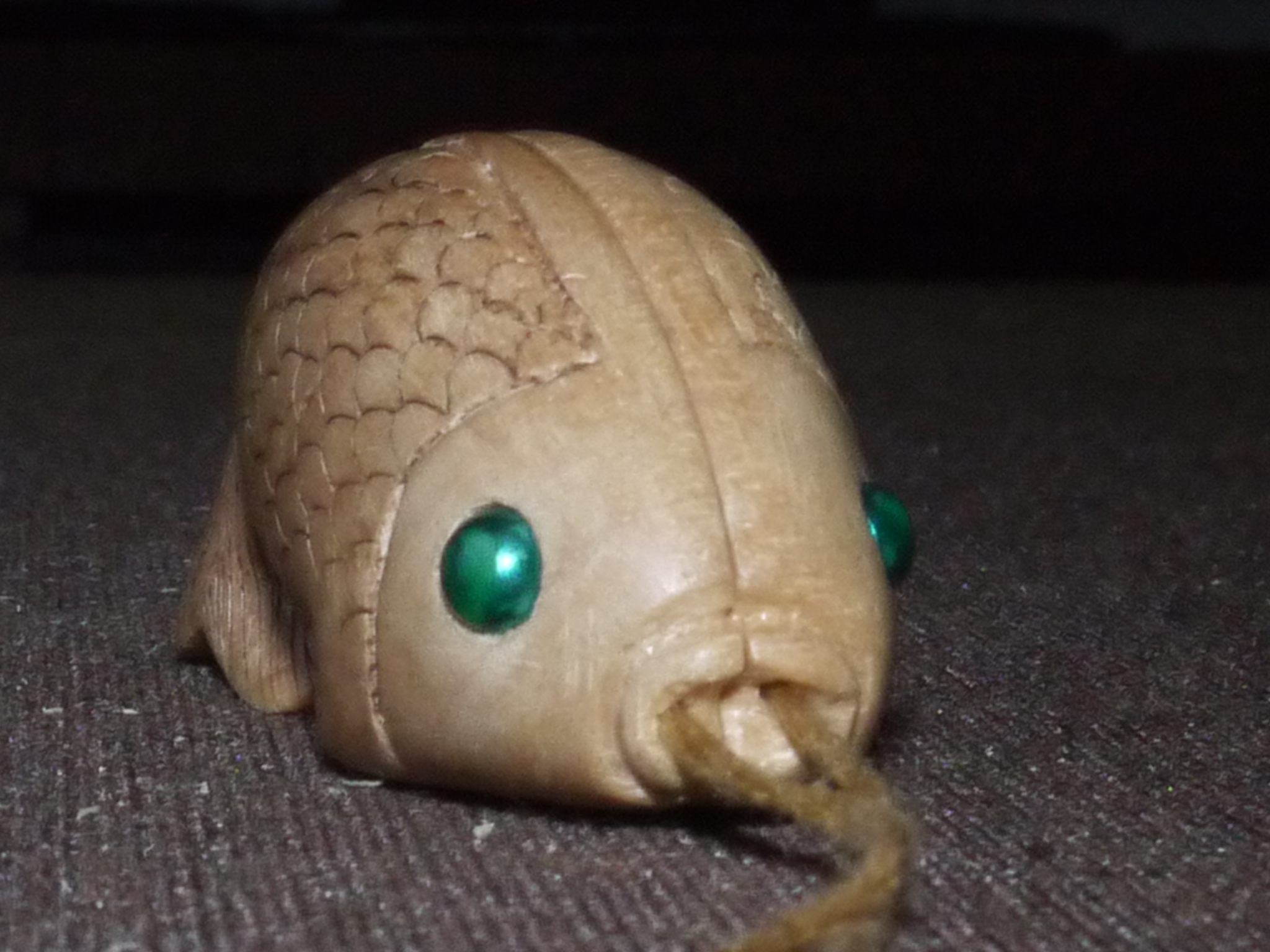
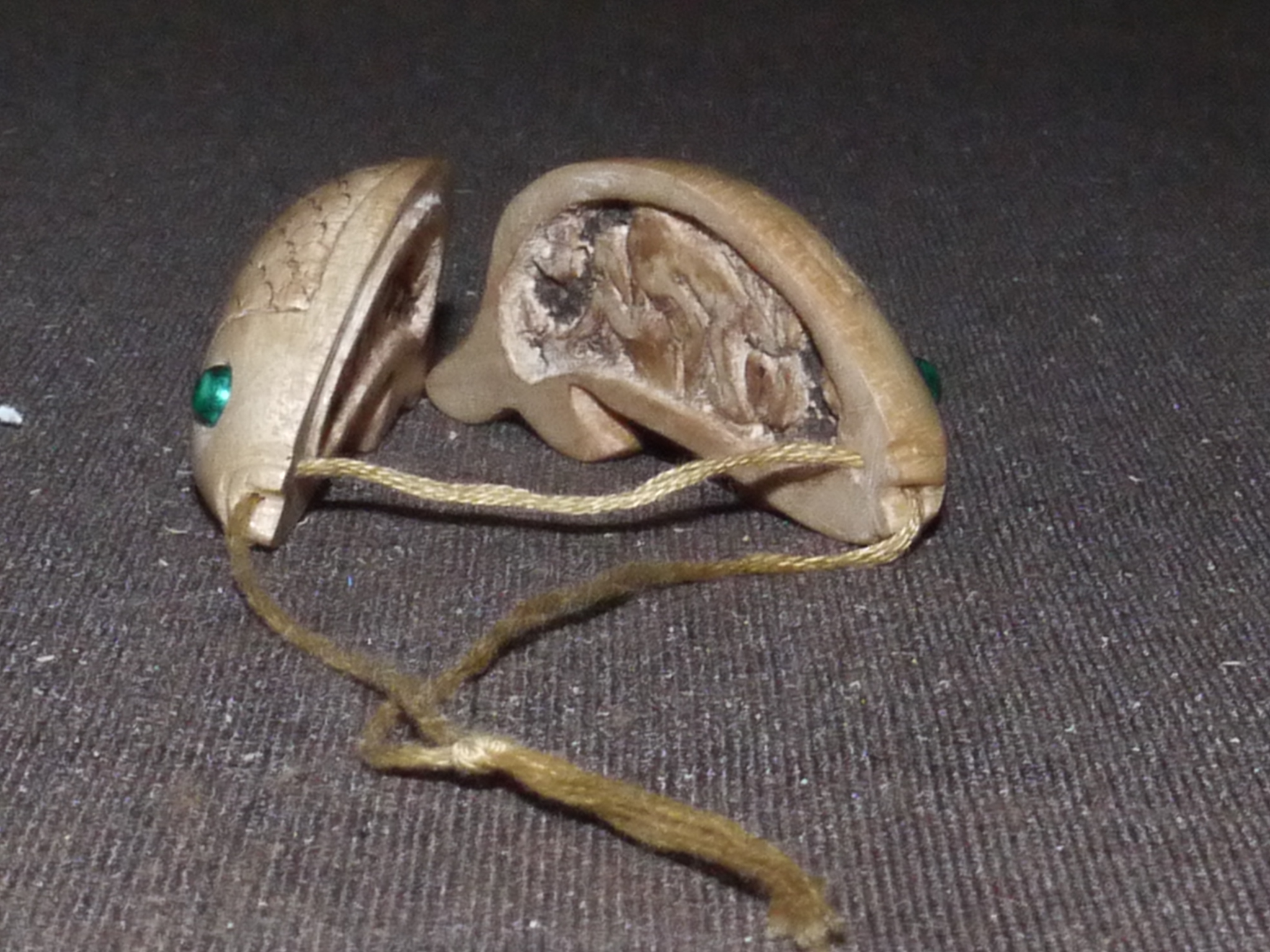
The fish was my first attempt at Netsuke (from the Japanese ne+tsuke ‘root’ + ‘to attach’) which are miniature sculptures invented in 17th-centuryJapan to serve a practical function. Traditional Japanese garments had no pockets so men who wore them needed a place to store their personal belongings, such as pipes, tobacco, money, seals, or medicines.Their solution was to place such objects in containers (sagemono) hung by cords from the sash (obi). The containers may have been pouches or small woven baskets, but the most popular were beautifully crafted boxes (inro) which were held shut by sliding beads on cords (ojime). Whatever the form of the container, the fastener that secured the cord at the top of the sash was a carved, button-like toggle called a netsuke. I had seen one of these made from bone, however mine is made from white beech and I have also carved designs on each side in the centre of the fish.
The wood has been rubbed with very finely ground coffee beans to give it a slight  colouration but also to enhance the scales. Swedish kolrossing uses this technique.
Image

Netsuke – white beech

Image


My Art, My Carving

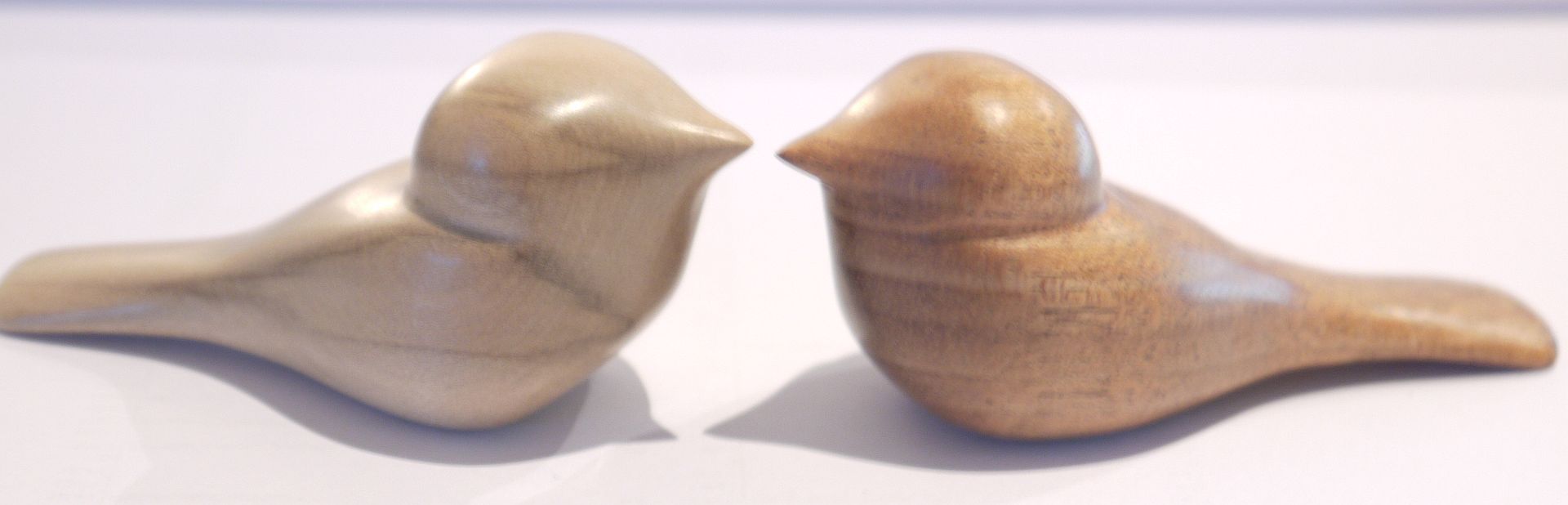
My birdsTwo of my recent Comfort Birds, made from Black Hearted Sassafras and Tasmanian Blackwood. A small project I was introduced to by Brian Weatherburn whilst visiting Ipswich, Qld Woodcrafts Group. These small birds are highly finished and are made to hold in the palm of your hand. They are very tactile and soothing. I think the original pictures from this were published in the American Woodcarving Illustrated.

I have been carving wood for about 18 years now since I went to the Timber andWorking with Wood show and saw the amazing sculptures, pictures and objects that can be fashioned from this beautiful resource. I joined the Sydney Woodcarving Group and enjoy my association with them. These days I travel quite a lot so restrict my carving to mostly small pieces so I can carry all my paraphenalia with me including small gouges, knives, sharpening stone and strop, sketchbook and always graph paper – good for re-sizing pictures, and my trusty cordless Dremel when I need to do a lot of sanding.

Woodcarving is practised by only a few people in Australia and although you will find plenty of wood turners you will not find too many folk who carve wood. Carving a piece of wood takes time and patience, especially in the final stages when you have to get your carving ‘finished’ , either by sanding or deft tool strokes, but the satisfaction when a piece is finished is wonderful.